“It Was Very Good”

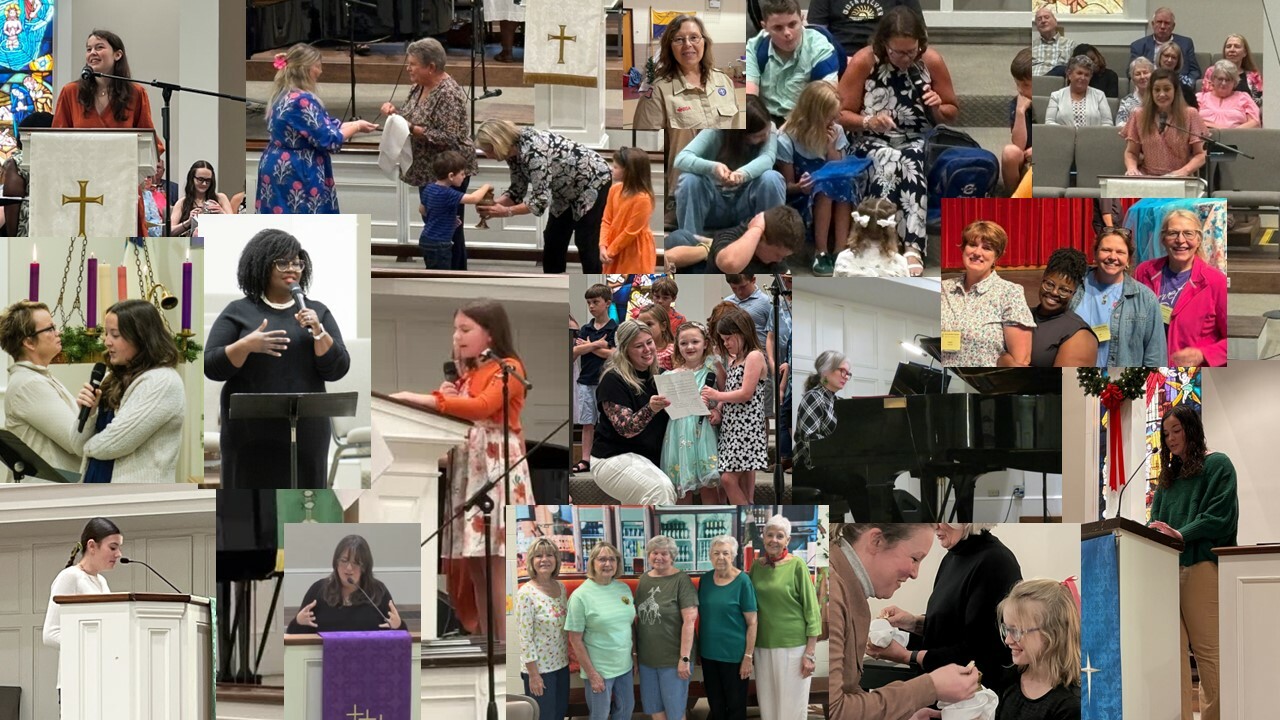
In the beginning, God created humanity in God’s own image—
male and female together—
and God called it very good.
Before there were hierarchies, before there were systems of power, before there were roles that divided or diminished, there was simply this:
a shared identity, a shared calling, a shared participation in the life and love of God.
Both were given the same blessing:
“Be fruitful… have dominion…”
Not one over the other, but together, entrusted with the care of creation.
This is where our story begins.
The Fracture and the Longing
But as we read further, we see something shift.
After the Fall, the language of domination appears:
“He will rule over you.”
And Scripture does not call this good.
It names it as part of the brokenness—
a fracture in what was once mutual, shared, and whole.
From that moment forward, human relationships—
including relationships between men and women—
carry both the memory of God’s good design
and the distortion of that design.
And so the question for us becomes:
Are we living out of the goodness of creation… or the brokenness that followed?
Jesus and the Restoration of Relationship
When Jesus enters the world, he does not reinforce systems of domination.
He quietly, persistently undoes them.
He calls women into discipleship—
not as observers, but as learners, followers, and witnesses.
- Mary sits at his feet as a student, and Jesus calls it “the better part.”
- The Samaritan woman becomes an evangelist to her village.
- Mary Magdalene is entrusted as the first witness to the resurrection—
the first to proclaim, “I have seen the Lord.”
In a world where women’s voices were often dismissed,
Jesus consistently entrusts them with the Gospel.
And what we see in their lives is not limitation—
but fruit.
We see:
- Faithfulness in suffering
- Courage in proclamation
- Deep love and devotion
- Bold witness to the resurrection
In other words, we see the fruits of the Spirit emerging—
love, joy, peace, patience, kindness, goodness, faithfulness, gentleness, and self-control.
And Jesus never restricts that fruit.
He receives it.
Blesses it.
And sends it into the world.
The Early Church: A Shared Ministry
As the church is born, this pattern continues.
At Pentecost, the promise is fulfilled:
“Your sons and your daughters will prophesy.”
Women pray.
Women prophesy.
Women teach.
Women lead alongside men in the work of the Gospel.
Paul himself speaks of women as co-laborers:
Phoebe, Priscilla, Junia, and many others—
partners in ministry, bearers of the Good News.
And even where there is tension—where Paul writes to specific communities facing specific challenges—
we are reminded that those letters are pastoral responses to real situations,
not abstract rules detached from context.
The church, from the beginning, was learning how to live into the fullness of God’s calling—
sometimes stumbling, sometimes correcting, but always moving toward the work of the Spirit.
Authority Reimagined in Christ
When Scripture speaks of authority in the church,
it always comes back to Christ.
And Christ’s authority is unlike anything the world had seen.
He does not dominate.
He does not grasp for power.
Instead:
- He kneels to wash feet
- He lifts the forgotten
- He breaks bread with the excluded
- He gives himself in love
Authority, in the kingdom of God, is not about control—
it is about self-giving love.
So when we speak of leadership in the church, we must ask:
Does it look like Christ?
Does it bear the fruit of the Spirit?
Does it build up the body?
Does it reflect the goodness God first declared over creation?
A Church Still Becoming
Today, we continue to wrestle with these questions.
We inherit traditions shaped by Scripture, yes—
but also shaped by culture, history, and the long shadow of human brokenness.
And so we return, again and again, to the beginning:
“To be human, male and female, created in the image of God…
and called very good.”
We return to Jesus,
who lifts up those the world has set aside.
We return to the Spirit,
who pours out gifts on all God’s children.
And we look for the fruit.
A Word for Today
When we see women leading with wisdom…
preaching with clarity…
shepherding with compassion…
bearing the fruit of the Spirit in their lives—
we are not witnessing something new or threatening.
We are witnessing something ancient.
Something rooted in creation.
Something revealed in Christ.
Something empowered by the Spirit.
We are witnessing the church becoming more fully what God has always intended.
Invitation
So perhaps the question before us is not:
“Can women lead in the church?”
But rather:
“Where is the Spirit bearing fruit… and are we willing to honor it?”
Because in the kingdom of God,
the measure of leadership is not gender—
It is grace.
It is faithfulness.
It is love.
And wherever these are found,
there the Spirit is at work.
And it is, once again,
very good.