Steps inside...

There is a knowing that arrives secondhand,
passed gently from voice to voice,
faith learned by listening—
stories whispered at bedtime,
Scripture read in familiar cadence,
belief held like a warm coat
someone else wrapped around us.
It is real, this knowing.
But it is not yet complete.
Job lived there once.
He spoke of God with practiced faithfulness,
trusted words shaped long before the storm.
And then the ground gave way.
Certainties crumbled.
God arrived not as an answer,
but as presence—wild, vast, uncontainable.
And when the wind finally settled,
Job whispered a truth carved by experience:
I had heard of you with my ears,
but now my eyes have seen you.
Something had changed.
Not belief—but depth.
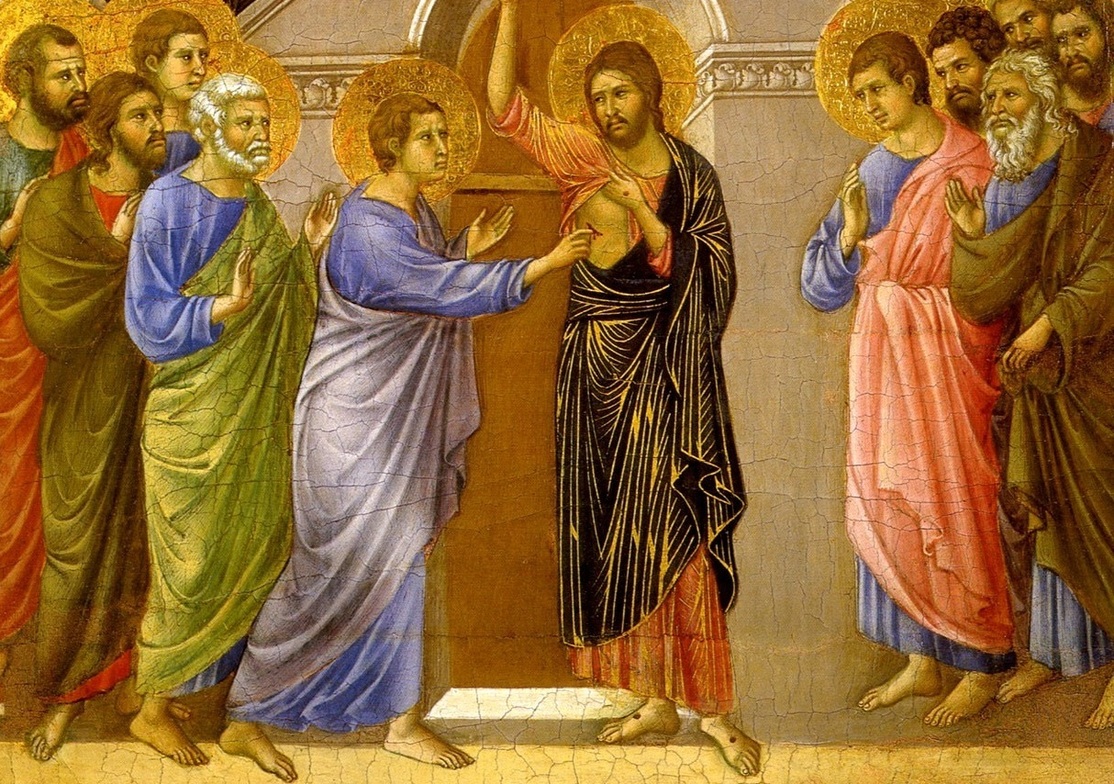
Thomas stood at that same threshold.
He loved Jesus, followed him,
knew the stories as well as anyone.
But resurrection demanded more
than borrowed certainty.
“Unless I see… unless I touch…”
Not defiance—
but an ache for what is real.
And Jesus did not turn away.
He stepped closer.
“Here,” he said.
Wounds open, hands steady.
Faith passed from rumor to encounter,
from distance to touch.
And from Thomas came the only words big enough:
My Lord. My God.
This is how faith matures.
It does not discard what we have been given;
it steps inside it.
It moves from recital to relationship,
from what we’ve been told
to what has held us
in the long night,
in the breaking open,
in the quiet grace of being met.
Sooner or later, faith must become our own—
not flawless, not fearless,
but honest enough to say:
this is no longer only what I have heard.
It is what I have seen.
What I have touched.
What has carried me.
And by grace,
it is mine.